
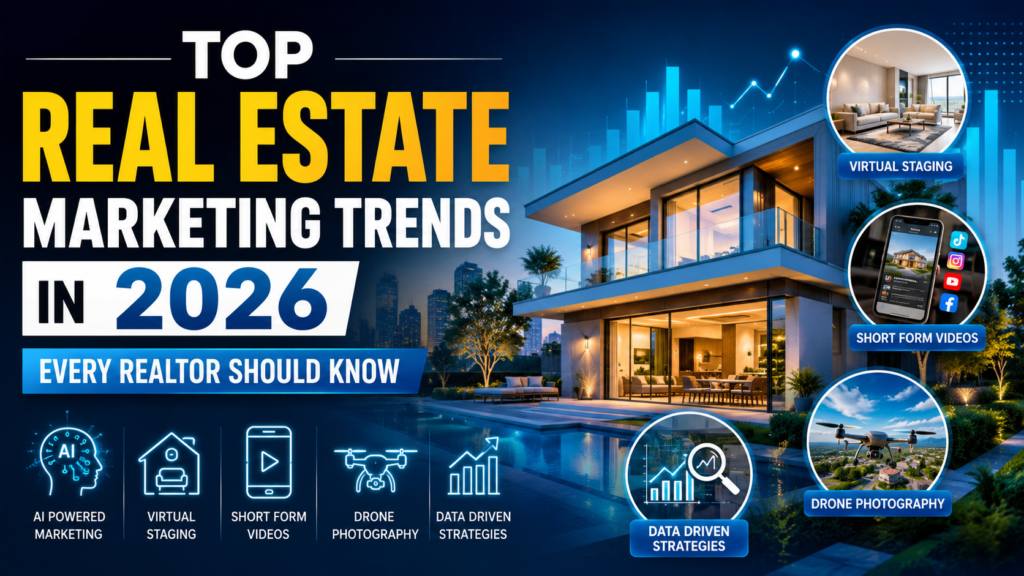
Top Real Estate Marketing Trends in 2026 Every Realtor Should Know
The real estate industry is changing faster than ever in 2026. Buyers are no longer searching for homes the way they did just a few years ago. Today’s buyers discover properties through Instagram Reels, TikTok videos, YouTube Shorts, AI-powered property recommendations, and visually optimized listings before they ever contact a realtor.
Modern real estate marketing is now driven by three things:
- High-quality visuals
- Mobile-first content
- Fast digital engagement
If your listings still rely on basic photos and outdated marketing methods, you are already falling behind competitors using AI tools, virtual staging, cinematic video tours, and advanced real estate photo editing.
According to recent 2026 industry reports, professionally edited listing photos, short-form videos, and virtual staging significantly improve property engagement and lead generation.
This complete guide explains the biggest real estate marketing trends in 2026, why they matter, and how realtors can use them to generate more leads, sell homes faster, and build stronger online visibility.
Why Real Estate Marketing Has Changed in 2026
The real estate market has become more digital than ever before.
Most homebuyers now begin their property search online. Instead of visiting dozens of homes physically, buyers shortlist properties through online visuals within seconds.
This means:
- Your listing photos are your first impression
- Your videos act as your sales presentation
- Your editing quality affects buyer trust
- Your online visibility determines lead generation
A weak listing today gets ignored instantly.
Modern buyers expect:
- Bright HDR photos
- Clean interiors
- Professional sky replacement
- Virtual staging
- Fast-loading mobile content
- Video walkthroughs
- Social media-ready property reels
Listings without these features often struggle to attract attention.
1. AI-Powered Real Estate Marketing Is Dominating
Artificial intelligence is now one of the biggest real estate marketing trends in 2026.
AI tools help realtors:
- Create virtual staging instantly
- Enhance property photos
- Generate listing descriptions
- Create social media videos
- Improve lead targeting
- Automate marketing workflows
Industry reports show AI adoption among real estate agents has increased dramatically in 2026.
Why AI Matters for Realtors
AI saves:
- Time
- Marketing costs
- Editing turnaround time
- Manual design work
Instead of waiting days for traditional staging or editing, agents can now market listings much faster.
However, there is one important issue:
Poor-quality AI editing can look fake.
Buyers quickly notice:
- Unrealistic furniture
- Bad shadows
- Incorrect room scaling
- Artificial lighting
That is why professional real estate photo editing still matters even in the AI era.
2. Virtual Staging Is Replacing Traditional Staging
Virtual staging has become one of the hottest trends in real estate marketing.
Empty homes often feel cold and unattractive online. Buyers struggle to imagine how rooms can be used.
Virtual staging solves this problem by digitally adding:
- Furniture
- Decorations
- Interior styles
- Lifestyle elements
Recent reports show virtually staged homes sell faster and generate higher engagement compared to empty listings.
Why Realtors Love Virtual Staging
Benefits include:
- Lower cost than physical staging
- Faster turnaround
- Multiple style options
- Better online engagement
- More buyer interest
Virtual staging is especially useful for:
- Vacant homes
- Apartments
- Luxury listings
- Rental properties
- New construction projects
According to real estate professionals, virtual staging works best when it looks realistic and professionally edited.
3. Short-Form Video Marketing Is Exploding
In 2026, video content is dominating real estate marketing.
Platforms like:
- TikTok
- Instagram Reels
- YouTube Shorts
- Facebook Reels
are now major property discovery platforms.
Industry experts say buyers are shifting from the “Zillow scroll” to the “TikTok swipe.”
Why Video Works So Well
Videos:
- Grab attention faster
- Increase emotional connection
- Improve engagement
- Generate more inquiries
- Perform better on social media
The most effective videos today are:
- Vertical format
- Under 60 seconds
- Mobile optimized
- Fast paced
- Emotion-driven
Realtors who ignore video marketing in 2026 risk losing visibility online.
4. Professional Real Estate Photo Editing Is More Important Than Ever
Many agents still underestimate how much photo quality affects buyer behavior.
Poor listing photos create major problems:
- Low click-through rates
- Fewer inquiries
- Reduced buyer trust
- Longer selling time
Professional editing improves:
- Lighting
- Exposure
- Window visibility
- Color balance
- Sky replacement
- Object removal
- Perspective correction
Homes with professional visuals often perform significantly better online.
Why Buyers Judge Listings Instantly
Modern buyers spend only a few seconds deciding whether to continue viewing a property.
Dark photos, cluttered rooms, or dull colors immediately reduce interest.
This is why professional services like:
- HDR blending
- Day-to-dusk editing
- Virtual staging
- Image enhancement
- Retouching
have become essential in real estate marketing.
For professional editing solutions, many realtors now use specialized services like
Photo Editing Services Company Real Estate Photo Editing Services
5. Mobile-First Property Listings Are Critical
Most buyers now browse listings on smartphones.
This changes everything about property marketing.
Your listing must:
- Load fast
- Look clean on mobile
- Use vertical images/videos
- Have optimized visuals
- Capture attention instantly
Mobile users scroll quickly.
If your first property image looks weak, buyers move on immediately.
6. Drone Photography Is Becoming Standard
Drone photography is no longer just for luxury homes.
In 2026, aerial visuals help:
- Showcase large properties
- Highlight neighborhoods
- Display nearby amenities
- Improve listing quality
Drone content is especially useful for:
- Villas
- Farms
- Commercial properties
- Waterfront homes
- Gated communities
Listings with aerial visuals appear more premium and professional.
7. Buyers Want Authentic Visuals
One major trend in 2026 is authenticity.
Buyers no longer trust heavily edited fake-looking images.
Modern buyers prefer:
- Realistic staging
- Natural lighting
- Accurate room sizes
- Honest presentation
Industry experts say overly artificial visuals can reduce buyer trust.
The goal today is not to fake a property.
The goal is to present the property at its best while remaining believable.
8. Hyper-Local Marketing Is Winning More Leads
Successful realtors are no longer just selling homes.
They are selling:
- Neighborhoods
- Lifestyle
- Community experience
Hyper-local content includes:
- School information
- Nearby restaurants
- Shopping centers
- Parks
- Transportation
- Local attractions
Buyers want to understand the entire living experience.
9. Social Media Has Become a Property Search Engine
Social media platforms now influence real estate buying decisions heavily.
Buyers discover homes through:
- TikTok
- YouTube
Modern realtors use:
- Property reels
- Before-and-after edits
- Carousel posts
- Virtual tours
- Behind-the-scenes videos
Strong social media branding builds trust and visibility.
10. Speed Matters More Than Ever
In today’s market, fast marketing wins.
Agents who upload polished listings quickly gain an advantage.
Buyers often engage with newly listed properties immediately.
Fast turnaround services for:
- Photo editing
- Virtual staging
- Video editing
help realtors stay competitive.
Biggest Problems Realtors Face in 2026
Problem 1: Listings Get Ignored
Cause:
Poor visuals and weak presentation.
Problem 2: Low Online Engagement
Cause:
No video content or social media optimization.
Problem 3: Buyers Lose Interest Quickly
Cause:
Low-quality photos and outdated marketing.
Problem 4: High Marketing Costs
Cause:
Traditional staging and slow workflows.
Problem 5: Strong Competition
Cause:
More agents using AI and advanced visuals.
How Realtors Can Stay Competitive in 2026
To succeed in modern real estate marketing, realtors should:
Invest in:
- Professional photo editing
- Video marketing
- Virtual staging
- Social media branding
- Drone photography
- Mobile optimization
Avoid:
- Low-quality images
- Overedited fake visuals
- Slow listing uploads
- Empty room photos
- Poor lighting
Final Thoughts
Real estate marketing in 2026 is completely different from traditional property advertising.
The market is now:
- Visual-first
- Video-first
- Mobile-first
- AI-assisted
Buyers expect premium presentation before they ever schedule a showing.
The realtors winning today are those using:
- Professional editing
- Virtual staging
- Video content
- Fast digital marketing
- Authentic visual storytelling
As online competition increases, professional real estate image editing and marketing services are no longer optional — they are essential.
If you want your listings to stand out and attract more buyers, investing in professional real estate photo enhancement can dramatically improve your online performance.
Explore professional editing solutions here:
Real Estate Photo Editing Services
Frequently Asked Questions (FAQs)
What is the biggest real estate marketing trend in 2026?
AI-powered visual marketing, short-form video, and virtual staging are among the biggest trends.
Why is virtual staging important?
Virtual staging helps buyers visualize empty properties and improves online engagement.
Do professionally edited photos help sell homes faster?
Yes. Professionally edited listing photos improve buyer interest, clicks, and inquiries.
Why are short-form videos important for real estate?
Platforms like TikTok and Instagram Reels generate massive engagement and property discovery.
Is AI replacing real estate photographers?
No. AI assists workflows, but professional editing and realistic presentation remain essential.
Why do buyers prefer professionally edited listings?
Professional visuals create trust, improve emotional connection, and make properties look more attractive online.
