
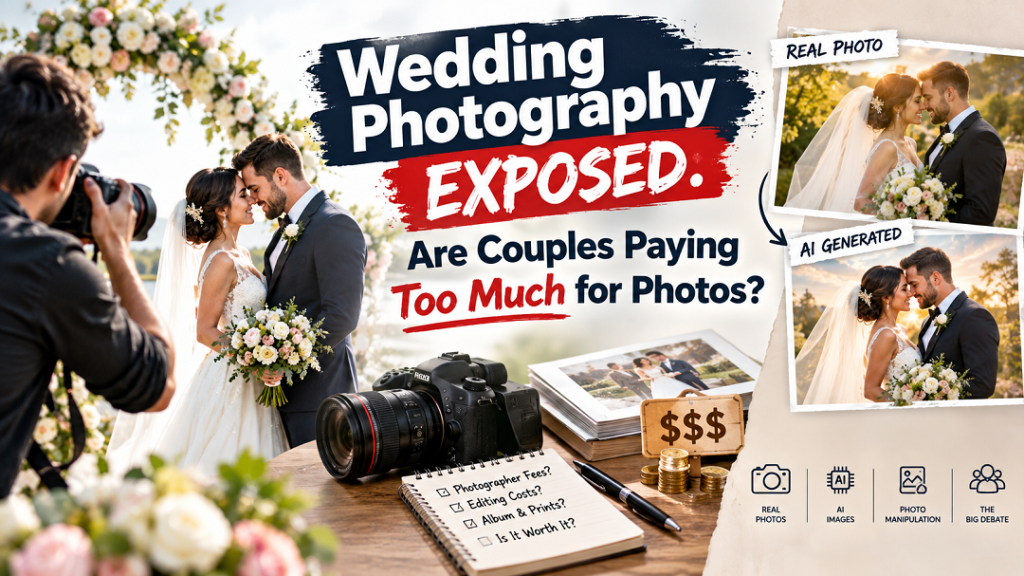
Wedding Photography Exposed: Are Couples Paying Too Much for Photos?
Introduction: Wedding Photography Exposed — Are Couples Really Paying Too Much?
A wedding is one of the most memorable events in a person’s life. From the first look and emotional family moments to the wedding ceremony, celebrations, and reception, couples want to preserve every important detail through photographs they can cherish for decades.
But when couples receive wedding photography packages costing hundreds or thousands of dollars, one question frequently comes to mind: Are wedding photographers charging too much for photos, or is professional wedding photography genuinely worth the investment?
The debate has become increasingly interesting as camera technology, AI-generated images, automated editing software, and digital photo manipulation continue to change the photography industry.
Some couples believe wedding photography prices are too high, particularly when they compare professional packages with smartphone photography or inexpensive photography services. Others argue that a wedding photographer provides much more than a collection of digital images. They bring technical expertise, experience, creative direction, professional equipment, careful planning, and the ability to capture unrepeatable moments.
There is also a growing discussion about what happens after the wedding. Couples may receive hundreds or thousands of photographs, but delivering a polished final gallery can require extensive selection, color correction, retouching, album preparation, and quality control.
So, where does the money actually go? Why do wedding photography prices vary so widely? Can AI reduce wedding photography costs? And how can couples determine whether they are receiving good value for their money?
In this comprehensive guide, we examine the wedding photography pricing controversy, the real costs behind professional wedding photography, the role of photo editing, and the questions every couple should ask before booking a photographer.
1. Why Is Wedding Photography So Expensive?
Wedding photography prices can vary significantly depending on the country, city, photographer’s experience, number of events, hours of coverage, team size, editing requirements, and final deliverables.
A simple ceremony photographed by one professional may require a very different budget from a multi-day celebration involving several locations, multiple photographers, cinematic portraits, and elaborate wedding albums.
Understanding these differences is essential before deciding whether a photographer is charging too much.
Professional Equipment Is Only One Part of the Cost
Wedding photographers often invest in professional cameras, multiple lenses, lighting equipment, memory cards, storage devices, backup systems, computers, and editing software.
They may also need duplicate equipment so that a technical failure does not jeopardize an important event.
However, equipment alone does not explain the full cost of a wedding photography package. A professional service also involves preparation, travel, communication, image processing, insurance where applicable, and business overhead.
Experience and Technical Expertise Matter
Wedding photography presents challenges that ordinary portrait sessions may not.
Lighting conditions can change rapidly. Ceremonies may have restrictions on movement or flash. Important moments happen without warning, and there may be no opportunity to repeat them.
Experienced photographers learn how to anticipate moments, manage difficult lighting, coordinate groups, direct portraits, and deliver consistent results under pressure.
Couples are not simply paying for the camera. They are paying for the photographer’s ability to use it effectively when important moments cannot be recreated.
Wedding Photography Includes More Than Shooting Time
A photographer may spend eight hours photographing a wedding, but the total workload can extend well beyond those eight hours.
A typical workflow may include:
- Initial consultations and planning.
- Reviewing schedules and venue details.
- Preparing equipment and backup systems.
- Traveling to the wedding location.
- Photographing the event.
- Backing up and organizing image files.
- Selecting the strongest photographs.
- Correcting exposure and color.
- Retouching selected images.
- Preparing galleries and albums.
- Communicating with the couple and handling revisions.
The amount of work depends on the package and the photographer’s workflow. Nevertheless, the hours spent photographing the event are only one part of the overall service.
2. What Do Couples Actually Pay for When Booking a Wedding Photographer?
One reason wedding photography pricing creates controversy is that clients often compare packages without realizing how different the included services may be.
A low-priced package and a premium package may both promise wedding photographs, but they might differ substantially in coverage, deliverables, editing, experience, and customer support.
Photography Coverage
Coverage refers to the time the photographer spends documenting the wedding.
A package covering a short ceremony will usually require fewer resources than a package covering preparations, portraits, the ceremony, the reception, and multiple events over several days.
Couples should check exactly when coverage begins and ends and whether overtime is available.
Number of Photographers
Some weddings benefit from multiple photographers, especially when events happen simultaneously or when the venue is large.
A second photographer may capture reactions from family members while the primary photographer documents the ceremony. This can increase coverage and provide additional perspectives.
However, a larger team is not automatically necessary for every wedding. The right arrangement depends on the event’s size and schedule.
Photo Editing and Retouching
Editing is an important part of professional wedding photography.
Photographers often capture images in RAW format, which provides flexibility for adjusting exposure, color, and other image characteristics during post-production.
The final gallery may require color correction, cropping, contrast adjustments, noise reduction, selected retouching, and consistency checks.
More advanced retouching can involve removing temporary distractions, refining selected portraits, or correcting background imperfections.
The amount of editing required depends on the number of images, their condition, the requested style, and the photographer’s delivery standards.
Albums, Prints, and Additional Products
Some packages include only digital files. Others may include printed photographs, premium albums, wall art, or custom-designed books.
These products have additional production costs and may involve album design, proofing, printing, shipping, and revisions.
Couples should compare the actual deliverables rather than assuming every wedding photography package includes the same products.
Business Expenses and Taxes
Depending on the location and business model, professional photographers may have expenses associated with studio rental, marketing, software subscriptions, insurance, transportation, equipment maintenance, accounting, and taxes.
These costs can influence pricing, although they do not automatically justify every price a photographer charges.
The best approach is to understand what a package includes and compare it with other services of a similar standard.
3. Are Wedding Photographers Overcharging Couples?
This is where the controversy becomes interesting.
Some wedding photography packages may be overpriced for the services offered. Others may represent reasonable compensation for extensive work, specialist expertise, and a demanding production schedule.
There is no single price that is fair for every photographer or wedding.
When a Wedding Photography Package May Offer Poor Value
Couples should look carefully at a package when:
- The deliverables are vague or poorly defined.
- The photographer cannot provide a representative portfolio.
- Important fees are disclosed only after booking.
- The editing style is inconsistent with the promised result.
- The contract does not clearly explain delivery times.
- The service does not match the couple’s actual requirements.
- The price is high but the included coverage and products are limited.
These issues do not necessarily mean that the photographer is dishonest. They indicate that the couple should request more information before committing.
When a Higher Price May Be Justified
A more expensive package may offer better value if it includes:
- Strong and consistent photographic work.
- Extensive coverage of important events.
- Experienced photographers and assistants.
- Reliable backup procedures.
- Carefully edited final photographs.
- High-quality albums and printing.
- Clear contracts and dependable communication.
- Specialized skills suited to the wedding’s conditions.
The important question is not simply whether the price is high. It is whether the service delivers value that matters to the couple.
Why Comparing Prices Alone Can Be Misleading
Imagine two photographers offering wedding packages at different prices.
One includes six hours of coverage, a single photographer, and a digital gallery. The other includes ten hours of coverage, two photographers, extensive post-production, and a printed album.
Comparing only the total price ignores the differences in scope.
Couples should compare the total package cost, the services included, the quality of the portfolio, and the final deliverables.
4. Wedding Photography Prices: What Is a Reasonable Budget?
Wedding photography prices depend heavily on location, demand, experience, and package details. There is no universal price that applies to every wedding.
In India, for example, wedding photography budgets can range from relatively affordable packages for small ceremonies to substantially higher budgets for premium, multi-day celebrations. Prices also vary between cities, photographers, and service providers.
In the United States, the United Kingdom, Australia, and other markets, typical budgets differ because of local business costs, labor rates, taxes, and customer expectations.
Rather than relying on a single industry-wide figure, couples should establish a realistic budget based on their needs.
How to Build a Wedding Photography Budget
Step 1: Decide which moments matter most.
Determine whether you need coverage of the entire wedding, only the ceremony, or several events.
Step 2: Estimate the number of hours required.
A realistic schedule can help avoid paying for coverage you do not need or leaving important moments undocumented.
Step 3: Choose the right team size.
A small ceremony may work well with one photographer. A large event with simultaneous activities may benefit from additional coverage.
Step 4: Define the deliverables.
Decide whether you need digital photographs, printed albums, wall art, engagement portraits, or additional sessions.
Step 5: Ask about editing.
Clarify how many photographs will be delivered, what editing is included, whether detailed retouching costs extra, and whether additional revisions are available.
Step 6: Compare similar packages.
Request itemized quotations from multiple photographers working at a comparable level.
Step 7: Review the contract.
Check deposits, payment schedules, cancellation terms, overtime fees, delivery deadlines, usage rights, and backup arrangements.
This approach helps couples make an informed decision without relying entirely on the cheapest quote or the most expensive portfolio.
5. The Hidden Work Behind Wedding Photo Editing
Many couples see the final gallery but never experience the work required to prepare it.
After a wedding, photographers may have to organize thousands of files, remove duplicates, select the best expressions, correct lighting inconsistencies, and prepare a polished collection that tells the story of the day.
This stage can be time-consuming, especially for photographers managing several weddings within a short period.
Culling and Image Selection
Culling involves reviewing photographs and selecting the strongest images for delivery.
The process may include removing duplicates, missed focus, accidental frames, unflattering expressions, and images that do not contribute to the final story.
Good culling helps create a gallery that feels intentional rather than overwhelming.
Color Correction and Exposure
Wedding venues often combine daylight, tungsten lighting, colored stage lights, candles, and flash.
These mixed conditions can make color consistency difficult.
Editing helps balance exposure, white balance, skin tones, and contrast while preserving the atmosphere of the event.
Skin Retouching and Portrait Refinement
Some portraits benefit from subtle retouching, such as removing temporary blemishes or distracting spots.
The goal should be to preserve the couple’s identity and natural features rather than applying excessive smoothing or changing their appearance beyond their preferences.
Background Cleanup
Unwanted objects, distracting details, and minor visual imperfections can sometimes be removed from selected photographs.
Complex edits require care to ensure that edges, lighting, textures, and shadows remain believable.
Album Design and Quality Control
If an album is included, the selected photographs may need to be arranged into a coherent visual story.
Quality control can involve checking image resolution, cropping, color consistency, print suitability, and file delivery requirements.
These tasks help explain why post-production is a significant part of wedding photography rather than an insignificant finishing step.
6. Is AI Making Wedding Photography Cheaper?
Artificial intelligence is changing wedding photography by making certain tasks faster and introducing new ways to create visual content.
However, the effect on prices is not straightforward.
AI may reduce the time needed for some editing tasks, but it does not eliminate every cost associated with photographing a wedding.
AI-Assisted Wedding Photo Editing
AI-powered tools can assist with image selection, subject masking, noise reduction, background cleanup, and selected retouching tasks.
For photographers who handle large galleries, these tools may reduce repetitive work.
However, automated results still require review. A tool may alter a detail incorrectly, produce inconsistent skin tones, or create artifacts around hair, clothing, and complex backgrounds.
AI-Generated Wedding Images
AI can create fictional wedding scenes, invitation artwork, concept images, and visual mood boards.
It can also help couples explore different themes before a real photography session.
However, a synthetic wedding image is not a documentary record of an actual ceremony.
If a couple hires a photographer to capture their real wedding, AI-generated images cannot substitute for authentic photographs of their family, friends, vows, and celebrations.
Will AI Reduce Wedding Photography Prices?
AI may influence pricing for certain services, particularly those involving repetitive post-production or synthetic creative work.
Nevertheless, wedding photography pricing also depends on coverage, experience, travel, equipment, editing standards, demand, and customer service.
Efficiency gains do not automatically translate into lower package prices. They may instead allow photographers to manage larger workloads, spend more time on creative work, or improve delivery times.
7. Real Wedding Photos vs AI-Generated Images: Why Authenticity Matters
The debate about AI photography extends beyond pricing. It also raises questions about what couples expect their wedding photographs to represent.
A wedding gallery documents a personal event. Couples may treasure images of their vows, family members, friends, cultural traditions, and spontaneous moments.
These photographs have meaning because they record real people and events.
Can AI Recreate a Wedding Moment?
AI can generate a realistic-looking wedding scene, but an image of a fictional couple exchanging vows does not document a real ceremony.
Similarly, generating a picture of a bride with a fictional family member cannot replace a genuine photograph of an actual person.
Synthetic images may be useful for creative projects, but they should not be confused with authentic wedding memories.
How to Recognize Potentially AI-Generated Wedding Images
When reviewing an image of uncertain origin, look for:
- Unusual hand positions or inconsistent fingers.
- Distorted jewelry, clothing details, or accessories.
- Inconsistent lighting and shadows.
- Unnatural facial details or repeated features.
- Incorrect lettering on signs or invitations.
- Background geometry that appears inconsistent.
- Missing context about the original source.
These clues are not definitive. Genuine wedding photographs may contain motion blur, difficult lighting, heavy retouching, or compression artifacts.
When authenticity matters, source information and the photographer’s original files can be more useful than appearance alone.
What About Heavily Edited Wedding Photos?
Traditional photo editing can also alter the appearance of a wedding image.
Color grading, exposure correction, cropping, and natural retouching are common professional practices. More extensive changes, such as replacing a background or adding generated elements, may be acceptable for creative portraits when they match the agreed brief.
However, couples should understand the editing style they are purchasing and communicate their preferences before the wedding.
A documentary-style gallery, a dramatic editorial portrait, and a fantasy-inspired composite may require different approaches.
8. Wedding Photo Manipulation: When Does Editing Go Too Far?
Photo manipulation is not automatically unethical. Its appropriateness depends on the context, the client’s expectations, and how the final image is presented.
Editing That Usually Improves Presentation
Examples include:
- Correcting exposure and white balance.
- Removing sensor spots and minor distractions.
- Refining skin tones.
- Correcting lens distortion.
- Removing temporary blemishes.
- Improving color consistency across a gallery.
- Preparing photographs for printing.
These adjustments can improve the final result without changing the fundamental event being documented.
Editing That Couples Should Discuss in Advance
Some changes can substantially alter the original image.
Examples include changing body proportions, replacing a venue background, removing important people, adding people who were not present, or generating details that did not exist.
Such edits may be suitable for certain creative portraits, but they should not be assumed to be part of every standard wedding package.
Why Transparency Matters
Couples should be able to understand the style of editing they will receive.
Photographers can explain whether their approach emphasizes natural colors, cinematic tones, editorial retouching, or artistic composites.
Agreeing on these expectations helps prevent disappointment and unnecessary revisions.
9. How Couples Can Get Better Value From Wedding Photography
Getting good value does not always mean selecting the cheapest photographer.
It means identifying what matters most and spending the budget accordingly.
Prioritize Important Moments
Create a list of essential photographs and events.
These might include the ceremony, family portraits, cultural rituals, candid moments, couple portraits, and reception highlights.
Sharing priorities with the photographer helps ensure that the coverage plan matches the couple’s expectations.
Choose Coverage Carefully
A clear schedule can help avoid unnecessary overtime and reduce the risk of missing important events.
Discuss travel between venues, preparation time, ceremony restrictions, and the expected end time.
Review Complete Wedding Galleries
A portfolio often highlights the photographer’s strongest images. Reviewing a complete gallery from a comparable wedding can reveal more about consistency, storytelling, lighting, and editing quality.
Ask About the Editing Process
Find out how many photographs will be delivered, whether color correction is included, what level of retouching is standard, and how additional edits are priced.
Understand Digital File Delivery
Confirm the file formats, resolution, gallery access, download options, backup arrangements, and expected delivery schedule.
Consider Albums Separately
If a printed album is important, ask for details about its size, page count, materials, design process, and revision policy.
Comparing these details can make quotations easier to evaluate.
Read the Contract Carefully
A clear contract should explain the scope of coverage, deliverables, payment terms, cancellation policies, overtime, usage rights, and delivery timelines.
Good communication before booking is often more valuable than negotiating a small reduction in price.
10. Why Wedding Photographers Outsource Photo Editing
Many photographers prefer to spend most of their working time capturing weddings, building client relationships, and planning creative sessions.
However, editing large galleries internally can consume many hours, especially during busy wedding seasons.
Outsourcing can help photographers distribute suitable post-production tasks to an external editing team.
Benefits of Outsourcing Wedding Photo Editing
More time for photography: Photographers can spend more time shooting, meeting clients, and developing their businesses.
Support for large galleries: External editing teams may help process high volumes of images during peak periods.
Consistent editing workflows: Clear style references and quality standards can help maintain a cohesive appearance across a gallery.
Flexible production capacity: Outsourcing may help studios manage seasonal workloads without relying entirely on permanent in-house editing capacity.
Focus on core business activities: Delegating appropriate editing tasks can allow photographers to concentrate on the services that differentiate their business.
What Should Photographers Look for in an Editing Partner?
Before outsourcing wedding photo editing, photographers should consider:
- Image quality and consistency.
- Experience with wedding photography.
- Color accuracy and natural skin tones.
- Ability to follow a reference editing style.
- Clear turnaround expectations.
- Revision and quality-control procedures.
- Secure file transfer and data handling.
- Transparent pricing and service scope.
- Confidentiality and appropriate contractual terms.
The best outsourcing arrangement is one that supports the photographer’s creative standards rather than forcing every gallery into the same generic editing style.
11. How Photo Editing Services Can Help Wedding Photography Businesses
A professional photo editing workflow can be valuable for wedding photographers who regularly manage large volumes of images.
Depending on the service offered, post-production may include color correction, exposure balancing, image culling, portrait retouching, background cleanup, and other editing tasks.
For example, a photographer who covers several weddings in one month may need to balance new assignments with editing backlogs from previous events.
An outsourcing partner can potentially help manage suitable portions of this workload, allowing the photographer to focus on capturing new moments and serving clients.
However, outsourcing works best when both parties agree on editing references, file requirements, delivery schedules, privacy expectations, and revision procedures.
For couples, this can also be an opportunity to ask their photographer about the editing workflow. Outsourcing is not inherently a sign of lower quality; the final result depends on the process, standards, and review applied to the images.
12. Frequently Asked Questions About Wedding Photography Costs
Why does wedding photography cost so much?
Wedding photography prices can include event coverage, equipment, travel, planning, image selection, editing, albums, storage, and business expenses. The actual cost depends on the photographer, location, package, and complexity of the wedding.
Are couples paying too much for wedding photography?
Some packages may offer poor value, while others may reasonably reflect extensive coverage, specialist expertise, and professional post-production. Couples should compare similar packages and review the quality and deliverables before deciding.
How much should I budget for wedding photography?
The appropriate budget depends on your location, event schedule, desired coverage, photographer experience, team size, and deliverables. Request itemized quotations from photographers in your area instead of relying on a single universal price.
Does wedding photography include editing?
Many professional packages include some level of post-production, but the exact scope varies. Confirm the number of delivered images, color correction, retouching, album design, and any additional editing fees before booking.
Is AI replacing wedding photographers?
AI can generate fictional wedding imagery and assist with certain editing tasks, but it does not independently document real wedding events. Professional photographers remain important when couples want authentic records of their ceremony and celebrations.
Can AI reduce wedding photography costs?
AI-assisted editing may reduce the time required for certain tasks, but total package pricing also depends on coverage, travel, equipment, experience, and deliverables. Savings vary by photographer and workflow.
Is wedding photo editing necessary?
Editing helps photographers correct exposure, balance colors, select the strongest images, and prepare a polished final gallery. The amount of editing required depends on the capture conditions and the agreed style.
Is it safe to outsource wedding photo editing?
Outsourcing can be suitable when the provider has appropriate security practices, clear contractual terms, reliable workflows, and consistent quality control. Photographers should evaluate file handling, confidentiality, access permissions, and delivery procedures.
How can I find an affordable wedding photographer?
Compare photographers in your area, define the coverage you need, review complete galleries, ask about editing and deliverables, and request itemized quotations. A smaller, clearly defined package may be better value than paying for services you do not need.
How can photographers reduce wedding editing backlogs?
Photographers can use a consistent workflow, organize files efficiently, establish editing presets where appropriate, use automation for suitable tasks, and consider outsourcing selected post-production work.
Conclusion: Wedding Photography Is About More Than the Price
So, are couples paying too much for wedding photographs?
Sometimes a package may be overpriced for what it delivers. In other cases, the cost reflects the photographer’s experience, the complexity of the event, the time spent editing, and the responsibility of documenting moments that cannot be repeated.
The best decision comes from understanding what is included, comparing equivalent services, and choosing a photographer whose work matches your priorities and budget.
AI is changing photography by introducing new creative tools and automating selected tasks. Nevertheless, authentic wedding memories, thoughtful image selection, professional editing, and consistent quality remain important parts of the wedding photography experience.
For photographers, studios, and businesses, an efficient post-production workflow can also make a significant difference. Outsourcing appropriate editing tasks may help reduce backlogs, manage busy seasons, and maintain consistent image quality.
Need Professional Photo Editing Services?
At Photo Editing Services Company., we understand the importance of polished, consistent images for photographers, studios, e-commerce businesses, and creative professionals.
If you are a wedding photographer managing large galleries or a photography business looking to streamline post-production, explore our photo editing services to learn more about solutions that may suit your workflow.
Visit: https://www.photoeditingservicesco.com/
Explore our website to learn more about our available photo editing services and how professional post-production support can fit your image production requirements.
Whether your priority is image enhancement, retouching, background refinement, or a more efficient editing workflow, choose a service that matches your quality expectations, delivery schedule, and project needs.
Spend more time capturing unforgettable moments and less time managing editing backlogs. Visit Photo Editing Services Co. to explore professional photo editing solutions for your business.
