
How Real Estate Photo Editing Helps Attract More Buyer Enquiries
A bright living room. A welcoming entrance. A kitchen with beautiful finishes. A property can have all the features buyers want and still look unremarkable in its listing photos.
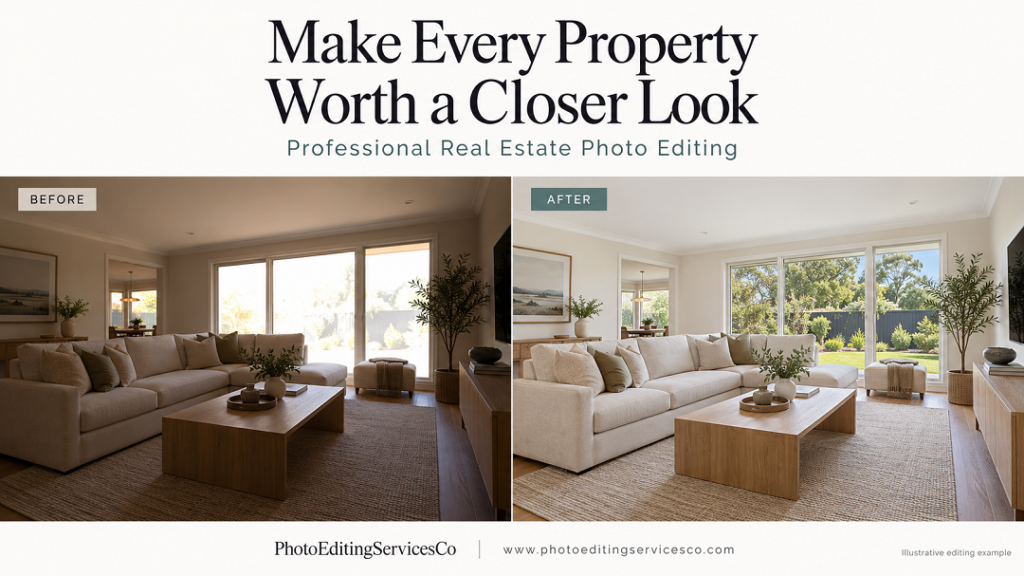
Sometimes the problem is a dark interior. Sometimes windows appear completely white, walls look yellow, or a wide-angle lens makes doorframes lean. These distractions can make it harder for someone browsing online to appreciate what the property actually offers.
Professional real estate photo editing helps solve that presentation problem. It brings balance, clarity, and consistency to property images so potential buyers can understand the space more easily.
For agents, photographers, developers, and property managers, the goal is straightforward: show the property clearly, create an inviting first impression, and give the right audience a reason to explore the listing.
What Is Real Estate Photo Editing?
Real estate photo editing is the process of preparing property photographs for marketing by correcting exposure, colour, perspective, and other visual distractions while preserving the property’s actual features.
Depending on the source images, the work can include balancing interior and window brightness, correcting colour casts, straightening architectural lines, refining detail, and preparing files for different publishing channels.
The strongest result feels natural. Viewers should notice the room, its layout, and its finishes before they notice the editing.
Editing also has limits. It cannot reliably recover details that were never captured, repair serious camera shake, or replace thoughtful photography. Good property preparation, careful shooting, and professional post-production work best together.
Why Property Photos Matter Before the First Enquiry
Before someone contacts an agent, they need a reason to pay attention.
Listing photographs help answer immediate questions: Does the living area suit my needs? Is the kitchen appealing? How do the rooms connect? What does the outdoor space offer?
Dark, inconsistent, or distracting images leave more of those questions unanswered. Clear photographs help viewers assess whether the property deserves a closer look.
That does not mean editing alone guarantees enquiries or a faster sale. Price, location, property condition, listing accuracy, and market demand all influence results. Photography supports those fundamentals by making the property easier to evaluate.
Think of editing as removing obstacles between the property and the viewer. The more clearly someone understands what is available, the easier it becomes to decide whether to take the next step.
Common Photo Problems That Can Weaken a Listing
Dark interiors that hide useful details
A room may feel comfortable in person but appear gloomy in a photograph. Bright windows can leave seating areas, cabinetry, and corners underexposed.
Careful exposure adjustments can reveal more of the captured detail without turning the room into a flat, unnaturally bright space. Shadows should still give furniture and architectural features depth.
Windows that distract from the room
Completely white windows can dominate an interior photograph. When suitable exposures are available, an editor can balance the room and the exterior view.
The aim is believable brightness. Making the garden outside much darker than the room can look just as artificial as leaving the windows completely washed out.
Walls and finishes with inaccurate colours
Daylight, ceiling lights, and lamps can create different colour casts within one room. White walls may appear yellow near a lamp and blue beside a window.
Selective colour correction helps bring those areas into balance while preserving the real character of materials. A warm timber floor should still look warm; a cream wall should not automatically become pure white.
Leaning walls and stretched furniture
Camera tilt and lens distortion can make buildings appear to lean or furniture look stretched near the edges of the frame.
Perspective correction helps make architectural lines more orderly. It should preserve believable proportions rather than make rooms appear wider or ceilings higher than they are.
A gallery with no consistent visual style
One attractive hero image cannot carry an entire listing. If the next photograph is much darker or noticeably warmer, the gallery can feel disconnected.
Reviewing images as a complete set helps maintain a coherent presentation from the entrance to the final exterior photograph.
The Editing Services That Make a Practical Difference
Exposure and colour correction
These adjustments form the foundation of a polished property gallery. They help balance light, control strong colour casts, and keep finishes recognisable.
For well-captured photographs, restrained corrections may be all that is needed. More editing is not automatically better.
HDR blending for difficult lighting
High dynamic range, or HDR, editing combines different exposures of the same scene. A darker frame may contain useful window detail, while a brighter frame reveals information in the interior.
Blending those frames gives the editor more usable information than a single exposure may provide. Careful alignment and local adjustments help avoid obvious halos, ghosting, and exaggerated contrast.
If HDR editing is part of your workflow, keep the original bracketed sets organised so the correct exposures reach the editor together.
Perspective and lens correction
Straight architectural lines help viewers read a room more comfortably. Correcting camera tilt and lens distortion can improve the presentation of interiors, façades, and corridors.
A useful review question is simple: does the corrected room still look physically believable? Furniture, doors, and ceiling height should remain proportionate.
Selective retouching
Small visual distractions can compete with a property’s main features. An editing brief can identify items for review and define which changes are appropriate.
Keep permanent features and the property’s condition accurately represented. Agree on the scope before editing begins, especially when a requested removal could change a viewer’s understanding of the property.
Exterior enhancement and twilight treatments
Exterior images often introduce the listing. Balanced colour and exposure can make the building easier to see while retaining natural texture in roofs, walls, and landscaping.
A virtual twilight treatment can also create an alternative marketing image when appropriate. It should remain believable, preserve the building, and be identified as digitally altered where required.
Virtual staging
An empty room can leave viewers uncertain about furniture placement or how the space might be used. Virtual staging can illustrate one possible arrangement.
Scale matters. Furniture should fit the room realistically and leave plausible circulation space. Clearly identify staged images and retain an unstaged version so viewers can distinguish the actual property from the furnishing concept.
Before publishing altered images, confirm the current requirements of the listing platform and the relevant market.
Who Benefits From Outsourcing Real Estate Photo Editing?
Real estate photographers
A busy photography schedule can quickly become a busy editing schedule. Post-production competes with travel, shooting, client communication, and business development.
Outsourcing can create more room for those activities. The value depends on finding a partner who understands the photographer’s style and delivers files that require little additional correction.
Real estate agents and agencies
An agency may receive photographs from several photographers or manage multiple listings at once. A shared editing brief can help create a more consistent presentation across those properties.
That consistency is particularly useful when images appear together on an agency website, in property brochures, or across social campaigns.
Property managers
Rental photography needs to communicate practical information clearly: room condition, layout, storage, and usable space.
A reliable editing process can help property managers prepare a coherent gallery while preserving an accurate view of the property.
Developers and commercial property marketers
Marketing several units or a larger property portfolio requires coordination. Images may need different crops and export sizes for websites, brochures, presentations, and advertising.
An organised post-production workflow helps keep those deliverables aligned and makes later updates easier to manage.
How to Choose a Real Estate Photo Editing Company
Start with evidence that matches your own work.
A portfolio of dramatic exterior images may look impressive, but it does not tell you how an editor handles your mixed-light interiors. Ask to see complete galleries and test representative files.
Evaluate five things before committing to ongoing work:
- Natural results: Do walls, floors, windows, and furniture look believable?
- Consistency: Does the full batch follow the same visual approach?
- Communication: Can the team translate your feedback into specific adjustments?
- Delivery clarity: Are deadlines, time zones, file formats, and revision arrangements agreed?
- Scope clarity: Do you understand what the quoted price includes?
A sample batch should contain ordinary working conditions, including at least one challenging image. Testing only an easy exterior photograph gives you less useful information.
Compare the time you spend briefing, reviewing, and requesting revisions as well as the editing fee. A low price offers limited value if every delivery creates substantial extra work.
A Simple Brief That Helps You Get Better Results
The instruction “make it look professional” leaves too much open to interpretation.
Give your editor a short, reusable brief covering the following:
Preferred style: Explain whether you want bright and neutral, softly warm, or a more restrained architectural finish. Include examples you have permission to share.
Colour accuracy: Identify finishes that must retain their original appearance, such as cream cabinetry, warm wood, or coloured feature walls.
Window treatment: State how much exterior detail you prefer and provide suitable source exposures.
Permitted changes: List requested retouching and identify features that must remain untouched.
Delivery requirements: Specify the deadline, time zone, file naming, image dimensions, and intended publishing channels.
Feedback process: Use image names and precise comments. “Reduce the yellow cast on the ceiling in Kitchen-03” is easier to act on than “the kitchen looks wrong.”
Once the first batch is approved, use it as a reference for future work. Update the brief when your preferences change.
A Practical Workflow From Shoot to Published Listing
1. Prepare the property before photographing it
Open suitable blinds, arrange furniture, and remove distracting personal items where appropriate. Physical preparation can reduce the need for later retouching and often produces a more convincing result.
2. Capture and select useful source images
Choose photographs that explain the property rather than repeating the same view. Keep related bracketed exposures together and include enough coverage to show how the main spaces connect.
3. Send the files with clear instructions
Provide the chosen images, editing brief, style references, and delivery requirements in an organised folder. Confirm any unusual work before the batch enters production.
4. Review the edited gallery
Check both individual details and the flow of the full set. Compare colours across neighbouring rooms, inspect window edges, and look for stretched objects or excessive smoothing.
5. Publish with a purpose
Choose a lead image that represents the property’s strongest relevant feature. Arrange the remaining photographs in a logical order so viewers can understand the layout.
Pair the gallery with accurate listing copy and a clear next step, such as requesting details or booking a viewing. Strong photography works best when the rest of the listing helps people act on their interest.
Measuring Whether Better Images Are Helping
Improving presentation is useful, but business decisions should also consider results.
Where your platforms provide the information, monitor listing views, enquiries, viewing requests, and the proportion of enquiries that are relevant. Photographers can also track editing time, revision frequency, delivery reliability, and repeat work.
Compare similar properties and account for differences in price, location, season, and promotion. One successful listing does not prove that photo editing caused the outcome.
For an editing partnership, a practical early measure is whether you can publish or deliver the gallery confidently with fewer corrections. That operational improvement can be valuable even before you have enough marketing data to identify a trend.
Frequently Asked Questions
Can real estate photo editing help attract more enquiries?
It can support that goal by making a listing clearer and more appealing to relevant viewers. Results still depend on the property, pricing, marketing reach, and the ease of contacting the agent.
Can you improve photos taken on a smartphone?
Well-captured smartphone photographs can benefit from exposure, colour, and perspective adjustments. Results depend on the source quality. Severe blur, excessive compression, or missing highlight detail may limit what an editor can recover.
Do all property images need HDR editing?
No. A well-exposed photograph taken in balanced light may need only basic adjustments. HDR blending is most useful when multiple exposures contain information needed to balance a high-contrast scene.
Is virtual staging the same as photo enhancement?
No. Enhancement improves the presentation of an existing photograph. Virtual staging adds a furnishing concept to the image and should be clearly identified so viewers understand what is actually present.
How much should I budget for editing?
The cost depends on image volume, source quality, turnaround, and complexity. Request a quote that separates basic correction from work such as detailed retouching, twilight conversion, and virtual staging. Confirm the revision scope and deliverables before ordering.
What should I send for a sample edit?
Send photographs that represent your typical assignments, along with the original exposures and examples of your preferred finish. Include a challenging interior so you can assess how the editor handles light, colour, and windows.
Give Your Property Photos the Professional Finish They Deserve
Your photographs should help potential buyers see what makes a property worth exploring. They should also support a dependable workflow for the people responsible for marketing it.
PhotoEditingServicesCo offers professional real estate photo editing services for photographers, studios, agents, and property marketers. Services include HDR blending, retouching, twilight conversion, virtual staging, drone image enhancement, and panorama stitching.
Start with three free sample edits to assess the finish using your own photographs. Standard basic enhancement and HDR work is listed with a 24-hour turnaround; confirm timing and scope for your project when ordering.
Share your images, preferred style, expected volume, and delivery deadline. Let us help you build a clear, consistent property gallery that is ready for your next listing.
Request your three free sample edits from Photo Editing Services Company and see the difference on your own property photos.
