
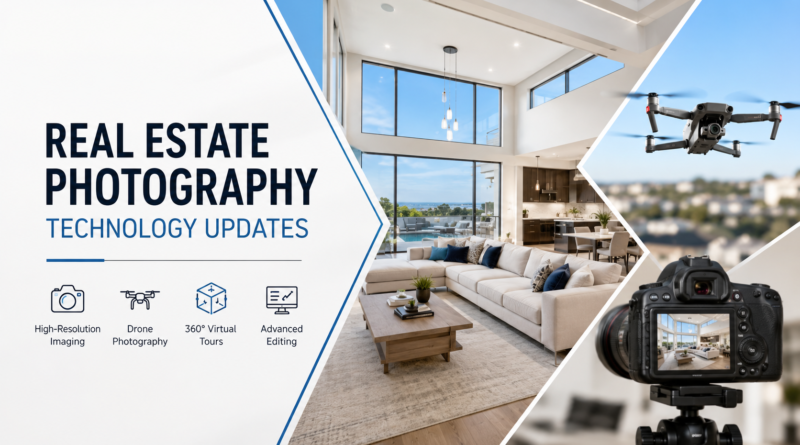
Real Estate Photography Technology Updates: Innovations Transforming Property Marketing
Introduction
Real estate photography has become one of the most important tools for marketing residential and commercial properties. In today’s digital-first property market, buyers often decide whether to schedule a viewing based on the quality of online images. As a result, photographers, real estate agents, property developers, and marketing professionals continue investing in better technology to create visually appealing property listings.
The real estate photography industry has evolved significantly over the past few years. Modern cameras, drones, artificial intelligence (AI), cloud-based workflows, virtual tours, and advanced editing software have transformed how properties are photographed and presented. These technologies help professionals produce brighter, sharper, and more realistic images while improving workflow efficiency.
Whether you’re a real estate photographer looking to upgrade your equipment or a property professional seeking better marketing results, understanding the latest technology updates can help you stay competitive in a rapidly changing market.
Why Technology Matters in Real Estate Photography
Property buyers expect detailed, high-quality visuals before arranging an in-person visit. Technology helps photographers showcase homes accurately while highlighting their most attractive features.
Modern photography technology provides benefits such as:
- Higher image quality
- Faster editing workflows
- Better low-light performance
- Improved color accuracy
- More efficient property shoots
- Enhanced online marketing
- Increased buyer engagement
- Better presentation across listing platforms
Professional visuals often generate more interest and can help properties stand out in competitive markets.
Mirrorless Cameras Continue to Lead
Mirrorless cameras have become the preferred choice for many real estate photographers.
Compared with older DSLR systems, mirrorless cameras offer:
- Faster autofocus
- Better dynamic range
- Silent shooting
- Electronic viewfinders
- Improved image stabilization
- Compact and lightweight designs
Wide-angle lenses combined with modern mirrorless cameras allow photographers to capture spacious interiors while maintaining natural-looking perspectives.
High-Resolution Image Sensors
New camera sensors capture more detail than ever before.
Higher-resolution images allow photographers to:
- Showcase architectural details
- Produce large marketing prints
- Crop images without losing quality
- Deliver premium property presentations
Clear, detailed photographs help buyers explore homes more confidently.
Drone Photography Continues to Grow
Drone photography has become a standard service for many real estate professionals.
Aerial images help showcase:
- Property boundaries
- Landscaped gardens
- Swimming pools
- Roof condition
- Surrounding neighborhoods
- Waterfront locations
- Nearby parks and amenities
Drone photography is especially valuable for luxury homes, commercial properties, farms, and large estates.
Virtual Tours Are Becoming More Popular
Many buyers begin their property search online.
Virtual tours allow potential buyers to explore homes remotely before scheduling visits.
Benefits include:
- Greater buyer engagement
- Reduced unnecessary viewings
- Better understanding of layouts
- Increased international interest
- More qualified inquiries
Virtual experiences continue becoming an important marketing tool for real estate professionals.
Artificial Intelligence in Image Editing
AI-assisted editing helps photographers save time while maintaining quality.
Modern editing tools assist with:
- Sky replacement
- Window exposure balancing
- Noise reduction
- Object removal
- Perspective correction
- Color enhancement
- Batch processing
Professional editors still review every image to ensure realistic results and accurate property representation.
HDR Photography Improvements
High Dynamic Range (HDR) photography remains essential for interior property photography.
HDR combines multiple exposures to capture details in both bright windows and darker interior spaces.
Modern HDR software produces more natural-looking images with:
- Balanced lighting
- Accurate colors
- Better shadow detail
- Cleaner highlights
This technique helps properties appear bright without looking unrealistic.
Better Lighting Equipment
Portable LED lighting systems continue improving.
Modern lighting offers:
- Adjustable brightness
- Accurate color temperature
- Lightweight designs
- Longer battery life
- Consistent illumination
Proper lighting helps photographers reveal room details while maintaining natural colors.
Cloud-Based Workflows
Cloud technology simplifies collaboration between photographers, editors, and clients.
Advantages include:
- Secure image storage
- Faster file sharing
- Automatic backups
- Remote editing
- Online client galleries
- Easier project management
Cloud platforms also reduce delivery times for completed property photos.
Mobile Photography Tools
Smartphone technology has improved dramatically.
While professional cameras remain the preferred choice for commercial work, modern smartphones are useful for:
- Quick property previews
- Social media updates
- Behind-the-scenes content
- Marketing stories
Mobile tools complement professional workflows rather than replacing them.
Image Editing Remains Essential
Professional editing continues to play a major role in real estate marketing.
Typical editing services include:
- Exposure correction
- White balance adjustment
- Perspective correction
- Lens distortion removal
- Color enhancement
- Sky replacement
- Window masking
- Object cleanup
Well-edited photographs help properties look inviting while accurately representing the space.
Floor Plans and Interactive Content
Property buyers increasingly appreciate detailed floor plans alongside photographs.
Interactive presentations help viewers understand:
- Room dimensions
- Layout flow
- Furniture placement
- Property functionality
Combining photography with floor plans provides a more complete viewing experience.
Sustainability in Real Estate Photography
Many professionals are adopting environmentally friendly practices.
Examples include:
- Digital document delivery
- Rechargeable batteries
- Energy-efficient lighting
- Reduced paper usage
- Cloud-based proofing
These practices reduce environmental impact while improving workflow efficiency.
Future Technology Trends
The future of real estate photography is expected to include:
- More advanced AI-assisted editing
- Improved drone capabilities
- Higher-resolution cameras
- Better virtual reality experiences
- Faster cloud collaboration
- Enhanced image automation
- Smarter property marketing tools
- More immersive online listings
Photographers who continue learning new technologies will remain competitive in an evolving marketplace.
Frequently Asked Questions
Why is professional real estate photography important?
Professional images create stronger first impressions, attract more buyers, and improve property marketing results.
Are drones worth using?
Yes. Drone photography showcases property surroundings and provides unique perspectives that traditional photography cannot capture.
Does HDR photography improve property images?
Yes. HDR balances interior and exterior lighting, creating brighter and more natural-looking photographs.
Can AI replace professional editors?
No. AI speeds up repetitive editing tasks, but experienced editors ensure images remain accurate, realistic, and visually appealing.
Should real estate photographers upgrade their equipment?
Investing in modern cameras, lenses, lighting, and editing tools can improve image quality and workflow efficiency over time.
Conclusion
Technology continues transforming real estate photography, helping professionals create more engaging and informative property presentations. From mirrorless cameras and drone photography to AI-assisted editing, HDR imaging, cloud workflows, and virtual tours, today’s tools make it easier to deliver outstanding visual content.
Despite these technological advances, successful real estate photography still depends on strong composition, proper lighting, careful editing, and attention to detail. Photographers who combine technical expertise with creative vision will continue helping clients market properties effectively in an increasingly digital world.
Need Professional Photo Editing Services?
Outstanding real estate photography doesn’t end when the camera is packed away. Professional editing ensures every image is bright, balanced, and ready for property listings, brochures, websites, and marketing campaigns.
Photo Editing Services Company. provides trusted image editing solutions for photographers, real estate agencies, architects, and property marketing professionals.
Their services include:
- Real Estate Photo Enhancement
- HDR Image Editing
- Perspective Correction
- Background Removal
- Image Masking
- Clipping Path
- High-End Photo Retouching
- Color Correction
- Object Removal
- Bulk Image Editing
Learn more about their professional editing services at:
https://www.photoeditingservicesco.com/
With experienced editors, reliable turnaround times, and consistent quality, Photo Editing Services Co. helps photographers and businesses create polished, professional images that attract buyers and enhance property marketing.
