
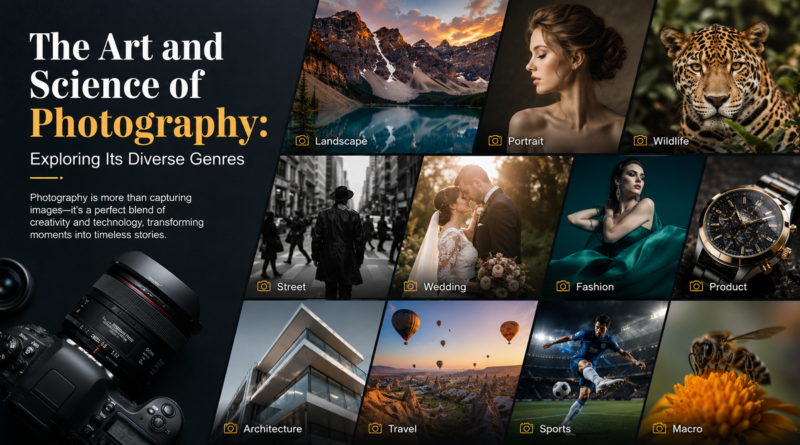
The Art and Science of Photography: Exploring Its Diverse Genres
Photography is far more than the simple act of pressing a shutter button. It is a powerful combination of creativity, technical skill, observation, and storytelling. Since its invention in the nineteenth century, photography has evolved into one of the most influential forms of visual communication. Today, it serves countless purposes, from documenting history and preserving memories to promoting brands and expressing artistic vision.
The beauty of photography lies in its versatility. Every genre offers a unique way to interpret the world, allowing photographers to specialize in subjects that align with their interests, skills, and creative goals. Whether capturing the raw emotions of a wedding, the breathtaking beauty of a landscape, or the intricate details of a product, photography continues to shape how people see and understand the world around them.
Understanding the diverse genres of photography is essential for anyone looking to develop their craft or appreciate the artistry behind compelling images. Each genre requires a distinct approach, technical knowledge, and creative perspective.
Portrait Photography
Portrait photography is one of the most recognized and practiced genres. Its primary goal is to capture the personality, emotions, and character of an individual or group. A successful portrait goes beyond physical appearance, revealing something meaningful about the subject.
Professional portrait photographers carefully consider lighting, composition, posing, and background elements to create visually engaging images. Portrait photography can range from formal studio sessions to natural environmental portraits taken in real-world settings.
Corporate headshots, family portraits, fashion editorials, and personal branding sessions all fall under this category. The best portrait photographers understand how to make subjects feel comfortable, allowing genuine expressions and emotions to emerge naturally.
Landscape Photography
Landscape photography focuses on capturing the beauty of natural and urban environments. Mountains, forests, deserts, oceans, and city skylines provide endless opportunities for photographers to create visually stunning images.
Patience is often a defining characteristic of successful landscape photographers. Many spend hours or even days waiting for the perfect lighting conditions. Golden hour and blue hour are particularly popular because they produce dramatic colors and soft, flattering light.
Composition plays a critical role in landscape photography. Techniques such as leading lines, foreground interest, and balanced framing help create images that draw viewers into the scene.
Modern landscape photography often combines technical expertise with artistic vision, resulting in photographs that inspire wonder and appreciation for the natural world.
Wildlife Photography
Wildlife photography is both challenging and rewarding. It involves capturing animals in their natural habitats while preserving authentic behavior and interactions.
This genre demands patience, quick reflexes, and a deep understanding of animal behavior. Wildlife photographers may spend long periods observing subjects before capturing the perfect moment.
Long telephoto lenses are commonly used to photograph animals from a safe distance without disturbing them. Ethical practices are especially important in wildlife photography, as protecting animals and ecosystems should always take priority over obtaining a photograph.
Wildlife images have the power to raise awareness about conservation efforts and inspire people to protect endangered species and fragile habitats.
Street Photography
Street photography captures spontaneous moments in public spaces. It reflects everyday life, human interactions, social dynamics, and cultural experiences.
Unlike carefully planned photoshoots, street photography thrives on unpredictability. Photographers must remain alert and ready to capture fleeting moments that reveal authentic stories.
Some of the most iconic photographs in history belong to this genre because they document real emotions and significant cultural moments. Street photography often encourages viewers to see familiar environments from fresh perspectives.
Strong observational skills and an understanding of composition are essential for success in this genre.
Wedding Photography
Wedding photography combines portraiture, event coverage, storytelling, and documentary techniques. Wedding photographers are responsible for preserving one of the most important days in a couple’s life.
The role requires technical expertise and exceptional interpersonal skills. Photographers must manage varying lighting conditions, coordinate group photos, and capture emotional moments as they unfold naturally.
Successful wedding photography tells a complete story, from preparation and ceremony details to candid interactions and celebrations. Every image contributes to a visual narrative that couples will treasure for generations.
Fashion Photography
Fashion photography is a dynamic genre that blends creativity, style, and commercial objectives. It showcases clothing, accessories, and beauty products while communicating a specific aesthetic or brand identity.
Fashion photographers collaborate with designers, models, makeup artists, stylists, and creative directors to produce visually striking images. Lighting, composition, color theory, and post-production all play significant roles in the final result.
From magazine editorials and advertising campaigns to social media content and e-commerce photography, fashion imagery remains a powerful influence on global culture and consumer behavior.
Product Photography
Product photography focuses on presenting items in the most attractive and informative manner possible. It plays a crucial role in e-commerce, advertising, catalogs, and marketing campaigns.
Consumers often make purchasing decisions based solely on product images, making high-quality photography essential for businesses. Clean backgrounds, accurate colors, proper lighting, and attention to detail are fundamental requirements.
Professional editing is equally important in achieving polished results. Businesses often rely on specialized services such as www.photoeditingservicesco.com to enhance product images, remove distractions, improve consistency, and create visually appealing presentations that strengthen brand credibility.
As online shopping continues to grow, product photography remains one of the most valuable commercial photography specialties.
Architectural Photography
Architectural photography captures the design, structure, and aesthetics of buildings and interior spaces. This genre requires a strong understanding of geometry, perspective, and lighting.
Architectural photographers often work with architects, construction firms, real estate companies, and design publications. Their goal is to showcase the visual appeal and functionality of spaces while maintaining accurate representation.
Careful attention to symmetry, balance, and composition helps create images that highlight architectural excellence.
Travel Photography
Travel photography combines elements of landscape, portrait, documentary, and street photography. It aims to tell compelling stories about destinations, cultures, people, and experiences.
Travel photographers document everything from iconic landmarks to hidden local traditions. Their work often inspires exploration while providing valuable cultural insights.
The most memorable travel images capture not only places but also the emotions and atmosphere associated with those locations.
Sports Photography
Sports photography freezes moments of action, competition, and athletic achievement. Fast-paced environments require photographers to react quickly while maintaining precise focus and exposure settings.
Professional sports photographers use high-speed cameras and telephoto lenses to capture decisive moments that might otherwise go unnoticed.
From international tournaments to local competitions, sports photography celebrates human determination, skill, and performance.
Documentary Photography
Documentary photography seeks to tell factual stories through visual imagery. It often addresses social issues, historical events, cultural traditions, and human experiences.
Unlike heavily staged photography, documentary work prioritizes authenticity and truthfulness. Photographers strive to present subjects accurately while providing meaningful context.
This genre has played a significant role in shaping public understanding of important events throughout history.
Fine Art Photography
Fine art photography prioritizes creative expression over commercial or documentary objectives. The photographer uses imagery as a medium to communicate ideas, emotions, and personal perspectives.
Fine art photographers often experiment with unconventional techniques, concepts, and visual styles. Their work may be displayed in galleries, museums, exhibitions, and private collections.
This genre demonstrates photography’s capacity to function as a sophisticated and respected form of artistic expression.
Macro Photography
Macro photography reveals details that are often invisible to the naked eye. Common subjects include insects, flowers, textures, jewelry, and other small objects.
Specialized macro lenses allow photographers to capture extreme close-up images with remarkable clarity and detail.
The genre encourages viewers to appreciate the complexity and beauty of ordinary subjects from entirely new perspectives.
Food Photography
Food photography has become increasingly important in the digital age. Restaurants, food brands, publishers, and content creators rely on visually appealing images to attract audiences and drive engagement.
Successful food photography combines styling, lighting, composition, and color coordination to make dishes appear appetizing and inviting.
Every detail, from garnish placement to background selection, contributes to the overall visual impact.
The Future of Photography
Photography continues to evolve alongside technological advancements. High-resolution cameras, mirrorless systems, artificial intelligence, drone technology, and sophisticated editing software have expanded creative possibilities beyond what previous generations could imagine.
At the same time, the core principles of photography remain unchanged. Great photography still depends on vision, storytelling, technical mastery, and the ability to connect with viewers on an emotional level.
As new tools emerge, photographers who combine artistic creativity with technical knowledge will continue to push the boundaries of visual communication.
Conclusion
Photography is both an art and a science, blending creative imagination with technical precision. Its diverse genres offer countless opportunities for exploration, specialization, and personal expression. From portrait and landscape photography to wildlife, fashion, documentary, and commercial work, each genre contributes uniquely to the visual culture that shapes modern society.
Understanding these photographic disciplines allows photographers to develop their skills, discover their passions, and create images that resonate with audiences. Whether pursued as a profession, an artistic endeavor, or a personal hobby, photography remains one of the most powerful tools for storytelling, communication, and creative expression in the modern world.
