
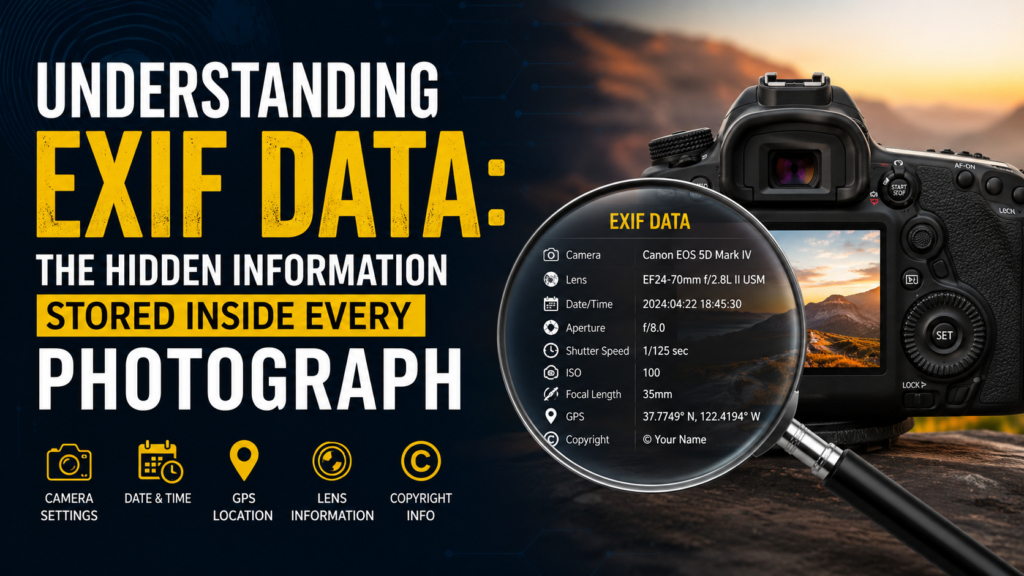
Understanding EXIF Data: The Hidden Information Stored Inside Every Photograph
Every digital photograph contains more than just what you can see. Behind every image is a collection of hidden information known as EXIF data (Exchangeable Image File Format). While most people focus on the visual aspects of a photo, EXIF data records technical details about how and when the image was captured.
This invisible metadata plays an important role in photography, journalism, digital investigations, copyright protection, and image management. Whether you’re a photographer, blogger, journalist, or simply someone who enjoys taking pictures with a smartphone, understanding EXIF data can help you make better use of your images while protecting your privacy.
What Is EXIF Data?
EXIF (Exchangeable Image File Format) is a standard that stores metadata inside digital image files. When you capture a photo using a digital camera, smartphone, drone, or mirrorless camera, the device automatically records technical information and saves it within the image.
Unlike captions or file names, EXIF data is embedded directly into the image file. It remains there unless it is intentionally removed or stripped by editing software or online platforms.
What Information Does EXIF Data Store?
The exact information depends on the device used, but EXIF data commonly includes:
- Camera manufacturer and model
- Lens model
- Date and time the photo was taken
- Aperture (f-stop)
- Shutter speed
- ISO sensitivity
- Focal length
- Exposure mode
- White balance
- Flash settings
- Image resolution
- Orientation
- GPS location (if enabled)
- Copyright and author information
Modern smartphones may also store software versions, HDR settings, and computational photography details.
Why Is EXIF Data Important?
1. Helps Photographers Improve
Every great photograph is a learning opportunity. By reviewing EXIF data, photographers can analyze camera settings used for successful shots and understand what worked well in different lighting conditions.
For example, checking the aperture, ISO, and shutter speed of a favorite landscape photo can help recreate similar results in future sessions.
2. Makes Photo Organization Easier
Professional photographers often manage thousands of images. Photo management software uses EXIF data to automatically organize images by:
- Date
- Camera model
- Lens
- Location
- Exposure settings
This makes searching large image collections much faster.
3. Supports Journalism and Fact Checking
Photojournalists and news organizations frequently examine metadata when verifying photographs. Although EXIF data alone cannot prove an image is authentic, it provides useful information about when and where a photo was captured.
Combined with other verification techniques, metadata helps reduce the spread of misleading or manipulated images.
4. Protects Copyright Information
Many cameras allow photographers to include copyright information directly within EXIF metadata. This helps identify ownership and can assist in protecting intellectual property when images are shared online.
Privacy Risks You Should Know
While EXIF data offers many advantages, it can also expose personal information.
If location services are enabled, photos may reveal:
- Home address
- Workplace
- Travel routes
- Frequently visited locations
Sharing original images publicly without removing GPS information could unintentionally reveal sensitive details about your daily life.
Fortunately, many social media platforms automatically remove location metadata before displaying uploaded images, although this is not always guaranteed.
How to View EXIF Data
Viewing EXIF information is simple.
On Windows:
- Right-click the image.
- Select Properties.
- Open the Details tab.
On macOS:
- Open the image in Preview.
- Choose Tools > Show Inspector.
On smartphones:
Most gallery applications include an Info or Details option that displays the embedded metadata.
There are also many trusted desktop and online tools that can display EXIF information without modifying the original file.
Can EXIF Data Be Removed?
Yes. Most photo editing applications and operating systems allow users to remove metadata before sharing images online.
Removing EXIF data is recommended when:
- Posting family photos publicly
- Selling products online
- Sharing travel images
- Uploading sensitive business photographs
Deleting unnecessary metadata helps protect your privacy while maintaining the visual quality of the image.
EXIF Data and Artificial Intelligence
As AI-generated images become more common, metadata is becoming increasingly important for image verification. Technology companies and camera manufacturers are developing methods to record the origin and editing history of photographs, helping distinguish authentic images from AI-generated content.
Future metadata standards may include secure digital credentials that document where an image originated and whether it has been altered. These innovations could strengthen trust in visual content across journalism, education, and legal documentation.
Best Practices for Using EXIF Data
To get the most value from EXIF metadata:
- Keep your camera’s date and time accurate.
- Enable copyright information whenever possible.
- Review camera settings after each photo session.
- Disable GPS tagging if privacy is a concern.
- Remove sensitive metadata before sharing images publicly.
- Always keep original image files backed up.
Following these simple practices helps you protect your information while making your photo library easier to manage.
The Future of Photo Metadata
Metadata technology continues to evolve alongside advances in digital photography. As cameras become smarter and artificial intelligence becomes more integrated into imaging workflows, metadata will become even more valuable for organizing images, verifying authenticity, and protecting digital content.
Photographers, journalists, businesses, and everyday users can all benefit from understanding how this hidden information works.
Conclusion
EXIF data is an often-overlooked but incredibly valuable part of every digital photograph. It provides technical details that help photographers improve their skills, enables efficient image organization, supports journalism and fact-checking, and protects copyright information. At the same time, understanding the privacy implications of metadata is essential in today’s connected world.
Whether you’re using a professional camera or simply taking pictures with your smartphone, learning about EXIF data gives you greater control over your images and helps you use digital photography more effectively.
Need Professional Photo Editing Services?
Great photography deserves exceptional finishing. Whether you need background removal, clipping path, image masking, jewelry retouching, ghost mannequin editing, color correction, portrait retouching, or bulk photo editing, Photo Editing Services Company delivers high-quality editing solutions for photographers, eCommerce businesses, online retailers, agencies, studios, and brands around the world.
With experienced editors, fast turnaround times, competitive pricing, and a commitment to quality, the team helps businesses create professional images that attract customers and strengthen their brand.
Explore all professional photo editing services and request a free quote today:
👉 https://www.photoeditingservicesco.com/
